
In today's digital world, APIs (Application Programming Interfaces) are the backbone of modern software applications. They allow different systems, applications, and services to communicate with each other seamlessly. Whether you're building a mobile app, an e-commerce platform, or enterprise software, APIs play a crucial role in delivering a smooth user experience.
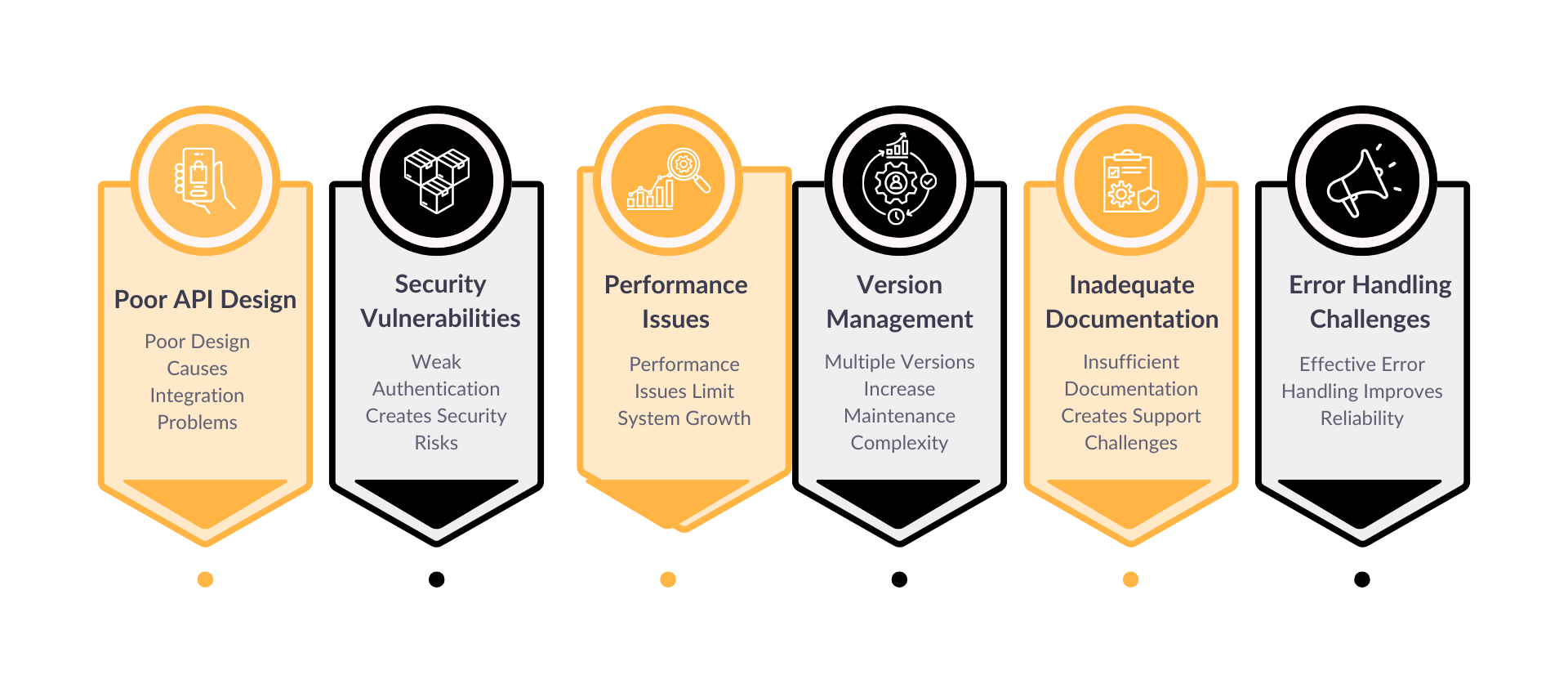
However, developing and maintaining APIs is not always straightforward. Developers often face several challenges that can affect performance, security, and reliability. Let's explore some common API development challenges and practical solutions to overcome them.
About ENK Technologies
1. Poor API Design
One of the biggest challenges in API development is creating an API that is easy to understand and use. Poorly designed APIs can confuse developers, increase integration time, and lead to errors.
Solution:
Follow RESTful or GraphQL design principles.
Use clear and meaningful endpoint names.
Maintain consistent request and response formats.
Create detailed API documentation.
A well-designed API improves developer experience and reduces support requests.
2. Security Vulnerabilities
APIs often handle sensitive data such as user information, payment details, and business records. Without proper security measures, APIs become attractive targets for cyberattacks.
Solution:
Implement authentication methods like OAuth 2.0 or JWT.
Use HTTPS for all API communications.
Validate all user inputs.
Apply role-based access control.
Regularly monitor and update security protocols.
Strong security practices help protect both users and business data.
3. Performance Issues
As the number of users grows, APIs may experience slow response times and performance bottlenecks.
Solution:
Implement caching mechanisms.
Optimize database queries.
Use pagination for large datasets.
Reduce unnecessary data transfer.
Monitor API performance continuously.
Improved performance leads to faster applications and better user satisfaction.
4. Version Management
Updating an API without affecting existing users can be challenging. Changes may break integrations that depend on older versions.
Solution:
Use API versioning strategies such as v1, v2, and v3.
Maintain backward compatibility whenever possible.
Notify users about upcoming changes well in advance.
Provide migration guides for developers.
Monitor API performance continuously.
Proper version management ensures smooth transitions and minimizes disruptions.
5. Inadequate Documentation
Even the best API can become difficult to use if the documentation is incomplete or outdated.
Solution:
Provide clear endpoint descriptions.
Include request and response examples.
Document error codes and troubleshooting steps.
Keep documentation updated with every release.
Good documentation saves developers time and improves API adoption.
6. Error Handling Challenges
Unclear error messages make debugging difficult and increase development time.
Solution:
Use standard HTTP status codes.
Return meaningful error messages.
Include error details when appropriate.
Create a consistent error response structure.
Effective error handling helps developers identify and fix issues quickly.
7. Scalability Concerns
As businesses grow, APIs must handle increasing amounts of traffic and data.
Solution:
Design APIs with scalability in mind.
Use load balancing and cloud infrastructure.
Implement rate limiting to prevent abuse.
Optimize backend services for high traffic.
Scalable APIs support business growth without compromising performance.
8. Third-Party Integration Issues
Many applications rely on external APIs for payments, messaging, analytics, and other services. Integration problems can affect overall functionality.
Solution:
Monitor third-party API availability.
Implement retry mechanisms.
Create fallback strategies.
Test integrations regularly.
A proactive approach helps minimize service disruptions.
Conclusion:
API development is a critical part of modern software engineering, but it comes with its own set of challenges. From security concerns and performance issues to documentation and scalability, developers must carefully address these areas to build reliable and efficient APIs.
By following best practices, maintaining proper documentation, and focusing on security and performance, businesses can create APIs that deliver a seamless experience for users and developers alike.
Investing time in solving these common API development challenges not only improves software quality but also helps organizations build scalable and future-ready digital solutions.